A nail in the tread looks like a small problem, and often it is. The trouble starts when a driver in Kings Mountain keeps driving on a soft tire, hoping it will hold until the weekend. Heat builds, the sidewall flexes far past its design, and a puncture that could have been patched becomes a tire that has to be replaced, sometimes along with a damaged wheel.
At The Tire Place LLC, flat repair follows the same basic rules used across the tire industry: where the hole sits matters as much as how big it is. Understanding the shoulder rule before you need it helps you know what answer to expect, and why a shop sometimes says no.
Where a puncture can be fixed
The repairable zone is the central tread area, roughly the middle three quarters of the tread width. A nail or screw that goes straight through that zone, with a hole no larger than about a quarter inch, is the classic candidate. The tread there is backed by steel belts, the repair can be sealed from the inside, and the tire can return to normal service.
Move that same nail toward the edge and the answer changes. The shoulder, where tread curves toward the sidewall, flexes constantly and does not hold a repair the same way. The sidewall itself is never repairable. It carries no belt package to hold a patch, it bends with every rotation, and a repair there can fail without warning. That is the shoulder rule, and it is not shop preference. It is an industry guideline built around how tires are constructed.

Plug, patch, or the combination unit
A plug pushed in from the outside was the roadside fix for decades. It can seal a hole, but it does not let anyone inspect the inside of the tire for hidden damage, and it does not seal the inner liner fully in many cases. A flat patch applied only from the inside seals the liner but does not fill the injury channel, leaving a path for moisture to reach the belts.
The current standard repair is a combination plug-patch unit. The tire comes off the wheel, the inside is inspected, the injury is cleaned and filled from inside, and a patch seals the liner over it. That inspection step is the point many quick fixes skip. Driving even a short distance on a very low tire can chew up the inner sidewall, leaving rubber dust inside the casing. A tire that looks fine outside can be ruined inside, and only taking it off the wheel reveals it.
What waiting actually does
A slow leak rarely stays slow. As pressure drops, the contact patch grows distorted, fuel use rises, steering feels heavy, and the shoulders wear fast. In Kings Mountain summers, pavement heat adds to the heat the flexing sidewall already makes. The endpoint is often a blowout or a tire so internally damaged that no responsible shop will repair it, even if the original nail was in the perfect spot.
There are other automatic disqualifiers. A puncture too close to an earlier repair, a hole at a sharp angle that tears rather than pierces, visible belt damage, or tread worn to the wear bars all end the conversation. So does a large cut from road debris on local highways. In those cases replacement is not an upsell, it is the only option that keeps the tire predictable at speed.
What you can do in the first ten minutes
Check pressure with a gauge if the tire looks low. If it is holding some air and the object is still in the tread, drive slowly and directly to a shop rather than pulling the nail out, since the nail itself is partly plugging the hole. If the tire is flat on the rim, do not drive on it. Fit the spare or call for help. A can of sealant may get you moving, but tell the shop you used it, because the residue has to be cleaned out and it can affect sensors. Photographing the object and noting where you picked it up, near a construction site or a storm-scattered road, can also help the technician anticipate other damage.
Common questions
Can a tire with a nail in the shoulder be repaired?
No. Industry guidelines limit repairs to the central tread area. Shoulder and sidewall injuries flex too much for a repair to hold reliably, so replacement is the standard answer.
Is a plug alone good enough?
A plug alone is considered a temporary fix. The accepted permanent repair is a combination plug-patch done from the inside after the tire is removed and inspected.
How long can I drive on a slow leak?
There is no safe interval to plan on. Top the tire up and get it inspected promptly, because low pressure causes internal damage that can turn a repairable tire into scrap.
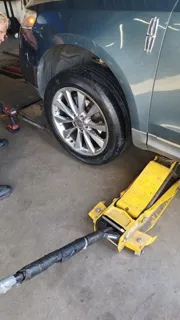
Photos in this guide are representative stock images.
← All guides from The Tire Place LLC← Back to The Tire Place LLC