Two new tires, two old tires, and one common instinct: put the fresh pair on the front, because the front steers, and on most cars the front does the driving too. The instinct feels logical. Tire makers and testing organizations recommend the opposite. When only two tires are replaced, the new pair belongs on the rear axle, and the reason is basic vehicle physics rather than shop habit.
Drivers in Kings Mountain hear this advice at counters like The Tire Place LLC and often push back, so here is the comparison laid out plainly, axle by axle, so the trade-off is visible instead of asserted.
Understeer you can manage, oversteer you may not
When tires lose grip in a turn on a wet road, one end of the car lets go first. If the front tires lose grip, the car runs wide, a condition called understeer. The driver's natural response, lifting off the throttle and steering into the turn, tends to help, and the car usually stays pointing forward. If the rear tires lose grip, the back end swings outward, called oversteer or fishtailing. Correcting it requires quick, counterintuitive steering, and many drivers overcorrect and spin.
Newer tires with deeper tread grip better in the wet, especially against hydroplaning. Putting that grip at the rear keeps the back end planted, so if anything lets go in a Piedmont thunderstorm, it is the front, in the more forgiving way. Keeping the better pair at the back is about which failure mode you would rather have, because worn tires somewhere on the car mean one end has less grip either way.
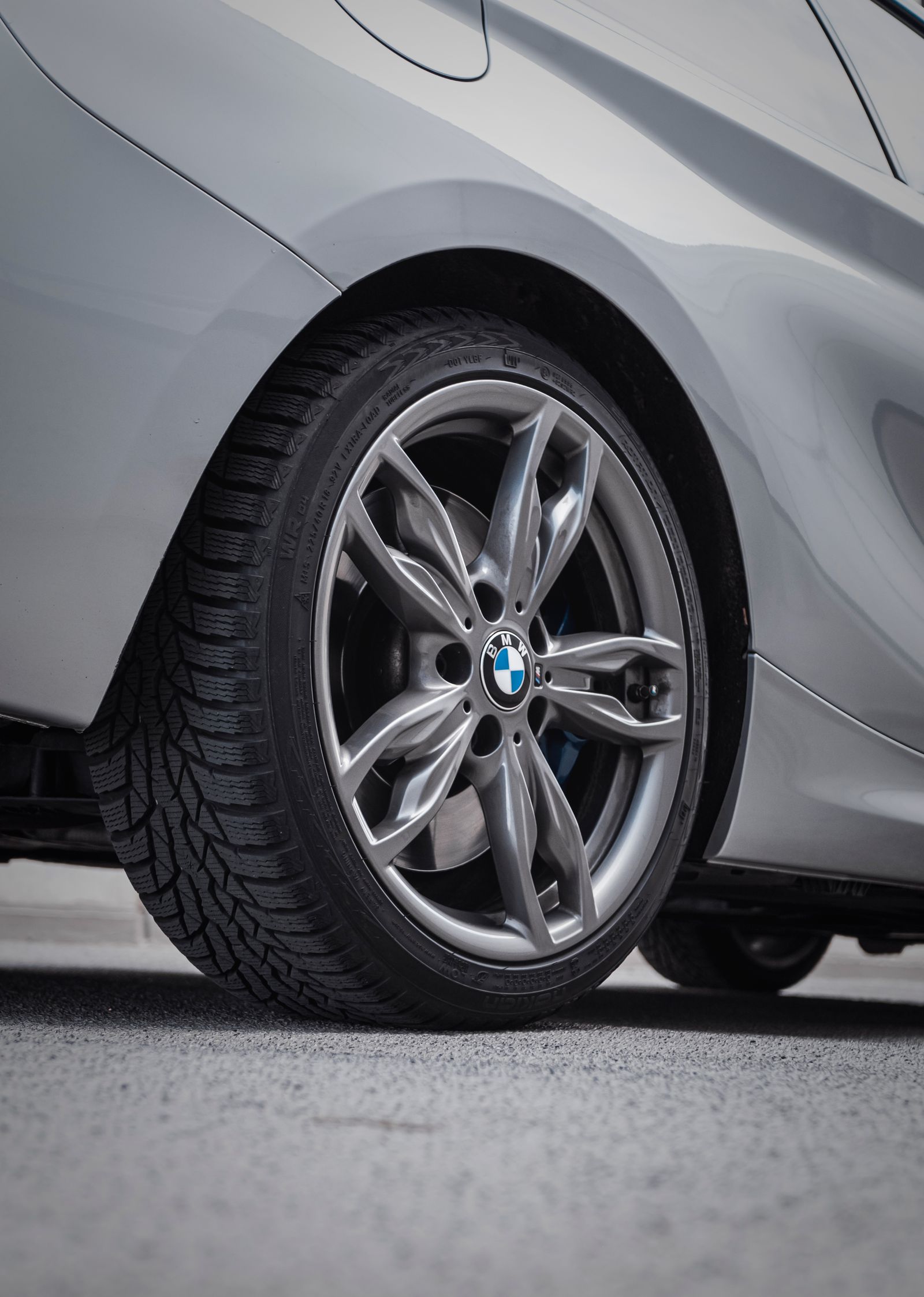
The two options, side by side
| Question | New pair on the front | New pair on the rear |
|---|---|---|
| Wet cornering behavior | Rear lets go first, risk of the back end swinging out | Front lets go first, car runs wide in a more controllable way |
| Hydroplaning balance | Worn rear tires hydroplane sooner and can spin the car | Deeper rear tread clears water and tracks behind the front |
| Steering feel | Feels sharper at first, which can mask the rear risk | Feels normal, with stability where drivers notice it least until it matters |
| Braking | Good front grip helps, but a loose rear can still step out under hard braking | More balanced, rear stays in line behind the fronts |
| Best use case | Rarely recommended when pairs are mixed | Standard recommendation from major tire makers for a single new pair |
The honest exceptions and limits
This guidance assumes the older pair still has usable, legal tread and no damage. If the old tires are worn to the bars, cracked, or mismatched in size, the real answer is replacing them too, not debating placement. Some vehicles complicate the picture: staggered fitments with different front and rear sizes, all-wheel-drive systems that require closely matched tread depths on all four corners, and directional tires that limit rotation patterns. On an all-wheel-drive vehicle, a big depth difference between new and old can strain the drivetrain, and a shop may recommend replacing all four or shaving a new tire to match, depending on the maker's tolerance.
Rotation also changes once pairs differ. The goal over time is to keep depths as even as possible, so ask how the shop wants the set rotated at the next service rather than assuming the usual pattern still applies.
Why four matched tires still win
The front-versus-back question only exists because budgets are real and tires often wear at different rates, especially on front-wheel-drive cars where the front pair does most jobs at once. The placement rule manages that reality safely. It does not make a mixed set equal to four matched tires of the same model and depth. When you can, replace in fours, rotate on schedule, and keep pressures at the placard figure, and the dilemma disappears. Until then, for Kings Mountain drivers replacing a single pair, rear axle first is the answer the physics supports, even when it surprises.
Common questions
My car is front-wheel drive. Does the rear rule still apply?
Yes. The recommendation is about stability when grip is lost, not about which axle drives the car. Major tire makers give the same rear-axle guidance for front-wheel-drive vehicles.
What if my old rear tires look fine?
If they have solid tread above the wear bars, no cracking, and matching size, moving them to the front and fitting the new pair at the rear is the standard approach.
Can I replace just one tire after a flat?
Sometimes, if the matching model is available and the remaining tires are still fairly new. On all-wheel-drive vehicles the depth difference limit is tight, so a shop should measure all four first.
Photos in this guide are representative stock images.
← All guides from The Tire Place LLC← Back to The Tire Place LLC