Most drivers in Kings Mountain have never touched their spare. It sits under the trunk floor or beneath the truck bed for years, losing air a little at a time, until the one afternoon on a shoulder when it is suddenly the most important part of the car. A first flat is stressful mostly because everything about the spare is unfamiliar.
This walkthrough covers what a temporary spare, often called a donut, can and cannot do, and how checking the forgotten fifth tire on a calm day changes the whole experience. The Tire Place LLC sees the results when that check never happened: spares too flat to use, and spares driven for months as if they were regular tires.
Meet your spare before you need it
Open the trunk well or look under the rear of the vehicle and confirm what you actually have. Some cars carry a compact temporary spare, some carry a full-size matching tire, and some carry no spare at all, only an inflator kit. The jack, lug wrench, and any wheel lock key should be with it. If any piece is missing, replace it now, not at roadside.
A compact spare is narrower and smaller than your road tires, with a shallower tread and a sidewall marked with limits. It is built to get you to a shop at reduced speed, not to finish a road trip. A full-size spare is a real tire, but if it has aged in the well for years it still needs inspection before you trust it at highway pace.
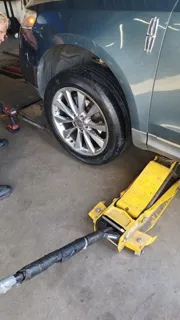
Fitting the spare, step by step
- Pull fully off the travel lane onto a flat, firm surface, set the parking brake, and turn on hazard lights. Place heavy objects or chocks against the tire diagonally opposite the flat if you have them.
- Loosen the lug nuts a half turn while the tire is still on the ground. They are far easier to break loose with the wheel held by the car's weight.
- Jack at the reinforced point shown in your owner's manual, near the flat tire. Raise the car until the flat clears the ground, keeping hands and feet out from under the vehicle.
- Remove the lugs, pull the flat off, and mount the spare. Thread lugs by hand, then snug them in a star pattern so the wheel seats evenly.
- Lower the car, remove the jack, and finish tightening in the same star pattern. Put the flat, jack, and tools back securely rather than loose in the cabin.
- Check the spare's pressure as soon as you can. Compact spares typically call for about 60 psi, much higher than a normal tire, and the exact figure is printed on the sidewall and the door placard.
- Drive gently to a shop. Avoid hard braking and sharp steering, because the smaller spare changes grip and handling, especially in rain.
The donut's limits, in plain numbers
Temporary spares are generally rated for speeds up to 50 mph and distances around 50 to 70 miles, with the exact limits molded into the sidewall. Exceeding them overheats a tire that has little tread and a small contact patch. Anti-lock brakes, traction control, and all-wheel-drive systems may behave differently with one odd-size tire fitted, and some manuals tell you to switch certain systems off or avoid long drives to protect the drivetrain.
The other trap is time. A spare fitted on Friday gets forgotten, and by the next month it has done commuting duty, school runs, and a highway trip. Treat the spare as a bridge to a repair or replacement, measured in days, not as a fifth regular tire that happens to look different.
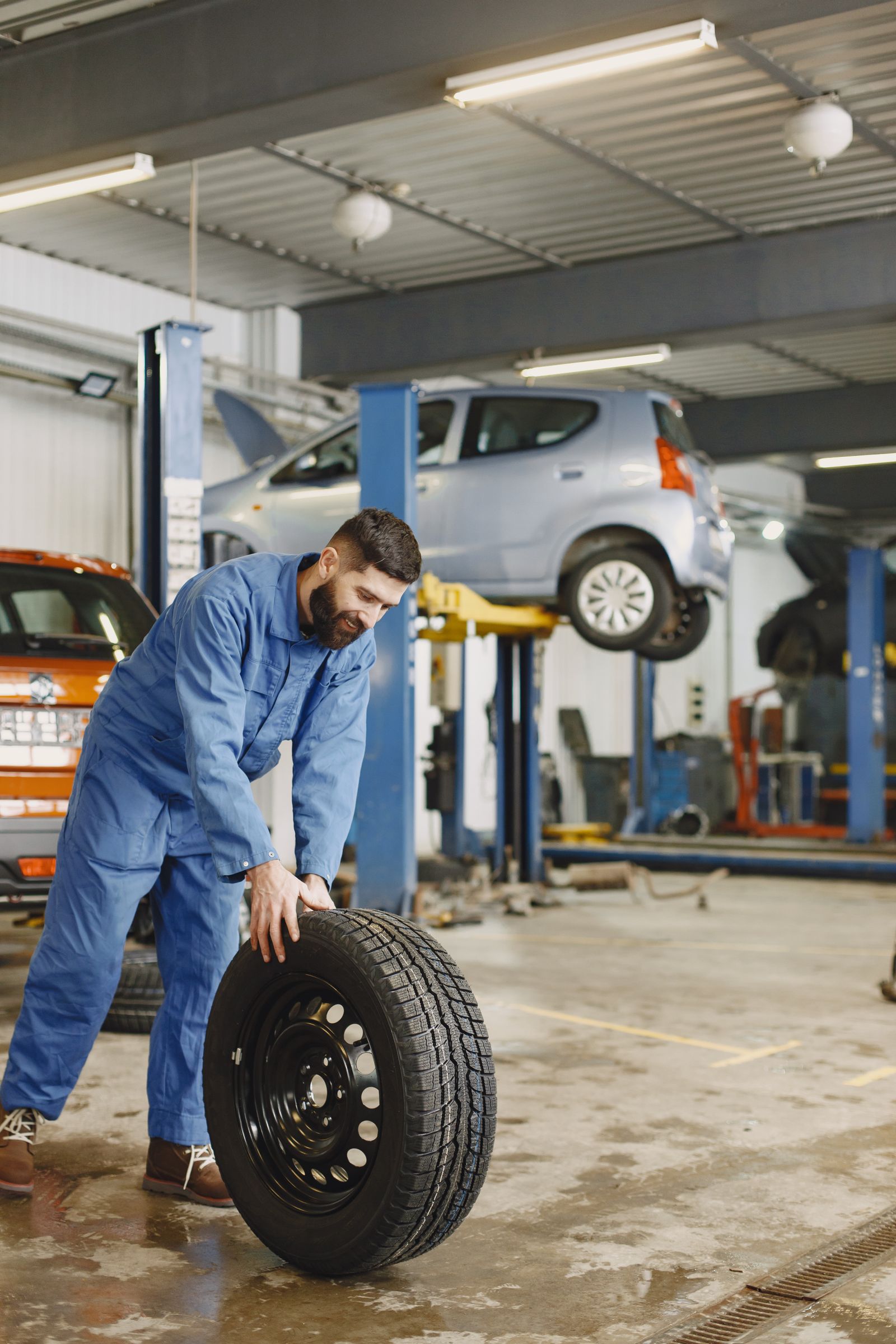
The forgotten fifth tire
Rubber ages whether it rolls or not. A spare that is ten years old, even with deep tread, has hardened and may have fine cracking. Check its pressure every time you check the other four, and look at the date code when a shop has it out. If your car has a full-size spare, ask whether it makes sense to rotate it into service so it wears and ages with the set, which depends on wheel size, tread pattern, and whether the tire is directional. Also check the inflator kit cars instead: the sealant can has an expiry date, and an expired kit is decoration.
For Kings Mountain drivers, pollen season and summer storms are good calendar hooks. When you clean out the trunk in spring, lift the floor panel, gauge the spare, and confirm the jack works. Five minutes then is worth an hour later.
Common questions
How fast can I drive on a donut spare?
Generally no more than 50 mph, and only for the limited distance printed on the sidewall, typically about 50 to 70 miles. It is a get-to-the-shop tire, not a travel tire.
Why does my spare need so much air?
Compact spares carry the car's weight on a much smaller tire, so they typically call for around 60 psi. Check the sidewall and placard figures for your vehicle.
Can an old, unused spare still be good?
Not automatically. Rubber ages in storage, so a spare around ten years old should be inspected and usually replaced even if the tread looks new.
Photos in this guide are representative stock images.
← All guides from The Tire Place LLC← Back to The Tire Place LLC